When the cost of getting to school exceeds the cost of school itself, education becomes a luxury. Here’s how trained young innovators applied sustainable development principles to create a market-viable solution.
The yellow school bus is infrastructure most Americans barely think about—until it’s not there. My school commute in India looked different decades ago: colorful tuktuks navigating potholed roads. My sister rode a horse-drawn tonga to school for years. Different continents, different vehicles, but one critical similarity: transportation costs remained a small fraction of our education expenses, keeping education accessible across economic strata.
From Training to Transformation
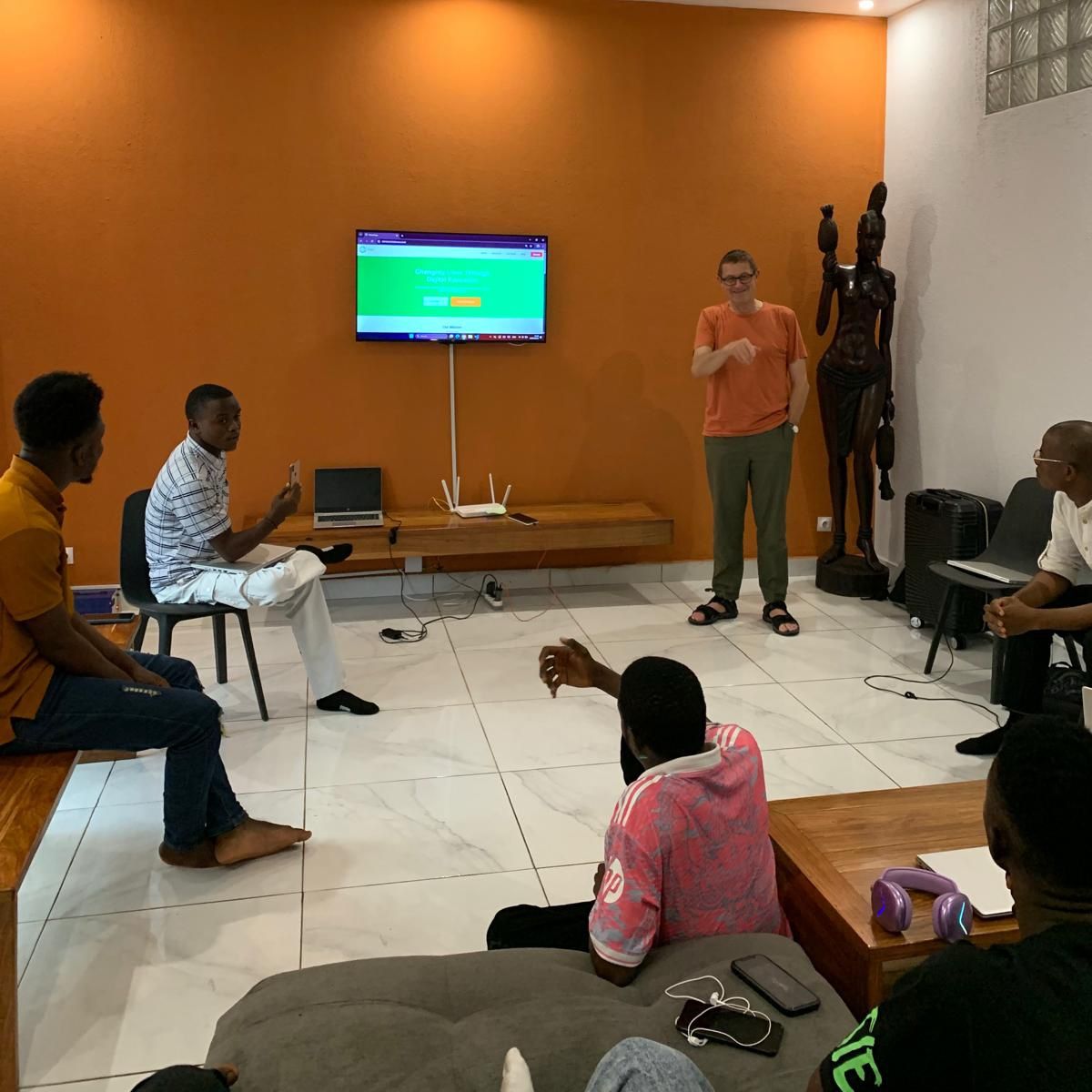
When we launched the Sostibl Impact Innovation Hub pilot in Guinea, we weren’t arriving with pre-packaged solutions. Instead, we brought a framework: training young entrepreneurs to apply sustainable development principles to identify community challenges and design business solutions addressing social, economic, and environmental dimensions simultaneously.
The process was deliberate. Participants learned that true sustainability isn’t just environmental protection—it’s the intersection of three critical dimensions. Every viable solution must address social impact (improving access and quality of life), economic viability (creating revenue streams), and environmental responsibility (minimizing ecological impact).
Armed with this framework, the entrepreneurs conducted systematic community assessments, interviewing families, parents, teachers, and students. One team focused on the CRS School, initially thinking their challenge was marketing—how to increase enrollment. But as they applied their training, asking deeper questions about barriers rather than just awareness, a different picture emerged.

The Discovery Process
The team mapped the student journey from home to classroom, tracking time spent commuting, transportation costs by distance, reliability issues, and impact on student attendance. Then came the revelation. One parent shared her monthly budget:
Monthly school fees: £25
Monthly transportation costs: £33
With no public transportation and poor road infrastructure, families relied on expensive private taxis. Transportation represented 57% of total education expenses. Children arrived exhausted, attendance suffered, parents skipped meals to afford the commute. The team had uncovered a systemic barrier undermining the entire education ecosystem.
Applying the Three-Dimensional Framework
Here’s where the training came alive. Instead of thinking “someone should provide free transportation” (traditional aid mentality), the team asked: “How can we create a sustainable business that solves this problem?”
Social Dimension Analysis:
Who’s most affected? Families living farther from school, lower-income households. What’s the ideal outcome? Reliable, safe, affordable access to education. Success metrics: increased attendance, reduced family stress, improved student performance.
Economic Dimension Analysis:
Current market: expensive, fragmented private transport. Target price point: significantly lower than £33/month to create real impact. Revenue potential: yes, with proper route planning and vehicle capacity. Economic beneficiaries: families save money, entrepreneurs earn income, local employment created.
Environmental Dimension Analysis:
Current impact: multiple individual taxi trips generate unnecessary emissions. Sustainable alternative: consolidated transport reduces vehicle use and emissions per student. Long-term consideration: well-maintained buses outlast informal transport networks.
Designing the Business Model
With their sustainability analysis complete, the team designed a comprehensive business plan:
Market Strategy:
- Competitive pricing: 45% reduction (approximately £18 vs. £33)
- Family savings: £19/month average, up to £21 for longer distances
- Scalable model beyond CRS School
Operations:
- Fixed routes based on student distribution
- Scheduled pickup/drop-off times
- Professional drivers (creating local employment)
- Vehicle maintenance and safety protocols
Revenue Sustainability:
- Monthly subscription fees with tiered distance-based pricing
- Break-even analysis accounting for all operational costs
- Self-sustaining model independent of donor funding
The Triple Win
The CRS School Bus Project achieves what traditional aid rarely does—a triple win across all sustainability dimensions:
Social: Reliable transport improves attendance; reduced travel fatigue enhances student focus; safe commutes give parents peace of mind; education becomes accessible regardless of distance.
Economic: Families save £180 annually, redirecting money to nutrition, healthcare, or educating additional children; young entrepreneurs earn income and gain business experience; local employment created; capital stays within the community.
Environmental: Consolidated transportation reduces individual vehicle trips; optimized routes minimize fuel consumption; professional maintenance reduces emissions.
From Recipients to Solution Creators
What distinguishes this approach is fundamental: these young people didn’t implement someone else’s solution—they designed it themselves by applying a structured methodology.
The training didn’t tell them what to do. It taught them how to think: identify root causes, analyze problems through multiple dimensions, design solutions that are both impactful and financially viable, measure success across all sustainability outcomes.
They understood intuitively what outside consultants often miss: which neighborhoods need service, what times work for families, how to build trust, what price points are feasible, which cultural considerations matter. Our role was providing the framework and patient capital, then stepping back. The creativity, contextual knowledge, and execution? That’s all theirs.
These young entrepreneurs now possess a proven methodology for identifying community challenges, skills to analyze problems through sustainability lenses, experience designing market-viable solutions, and confidence that they can solve their own community’s problems.
The Path Forward
The CRS School Bus Project demonstrates that when you equip young people with analytical tools rooted in sustainable development principles and trust them to apply those tools to their context, they create solutions that outsiders never would have designed—solutions that work precisely because they’re community-led, economically viable, and built to last.
Maybe someday, a child in Guinea will share fond memories of their school bus ride with the same warmth my sister brings to her tonga stories. But more importantly, that child will grow up in a community where young people are recognized not as aid recipients, but as solution creators—entrepreneurs who learned to see challenges through the lens of sustainable development and build businesses that serve both profit and purpose.
The Sostibl Impact Innovation Hub trains youth entrepreneurs in sustainable development frameworks, enabling them to transform community challenges into viable business solutions with lasting social, economic, and environmental impact.
Leave a Reply